How to Pay Off $20,000 Credit Card Debt in the USA — A Simple, Real-Life Guide for Working Adults
How to Pay Off $20,000 Credit Card Debt in the USA — A Simple, Real-Life Guide for Working Adults




Owing $20,000 in credit card debt can feel heavy. It affects sleep, confidence, and daily peace of mind. Many middle-class Americans reach this point after medical bills, job loss, home repairs, or rising living costs.
The good news? This debt is beatable. With a clear plan, steady habits, and the right tools, you can become debt-free in 18–36 months — sometimes even faster.
This guide shows you exact steps, real examples, charts, and tools to help you pay off $20,000 in credit card debt in the USA — without fancy jargon.
Step 1: Know Your Real Numbers (Start With Truth)
Before any plan works, you must face the numbers clearly.
Write down:
| Item | Example |
|---|---|
| Total balance | $20,000 |
| Average APR | 22% |
| Minimum payment | $520/month |
| Monthly income (after tax) | $3,800 |
| Fixed expenses | $2,400 |
Why this matters
At 22% APR, $20,000 costs about:
👉 $4,400+ per year in interest
👉 Over $13,000 extra if paid slowly
(Source: Consumer Financial Protection Bureau guidance)
You are not just paying debt — you are fighting interest.
Step 2: Choose Your Payoff Strategy (Snowball vs Avalanche)
There are two proven systems.
Option A: Debt Snowball (Motivation First)
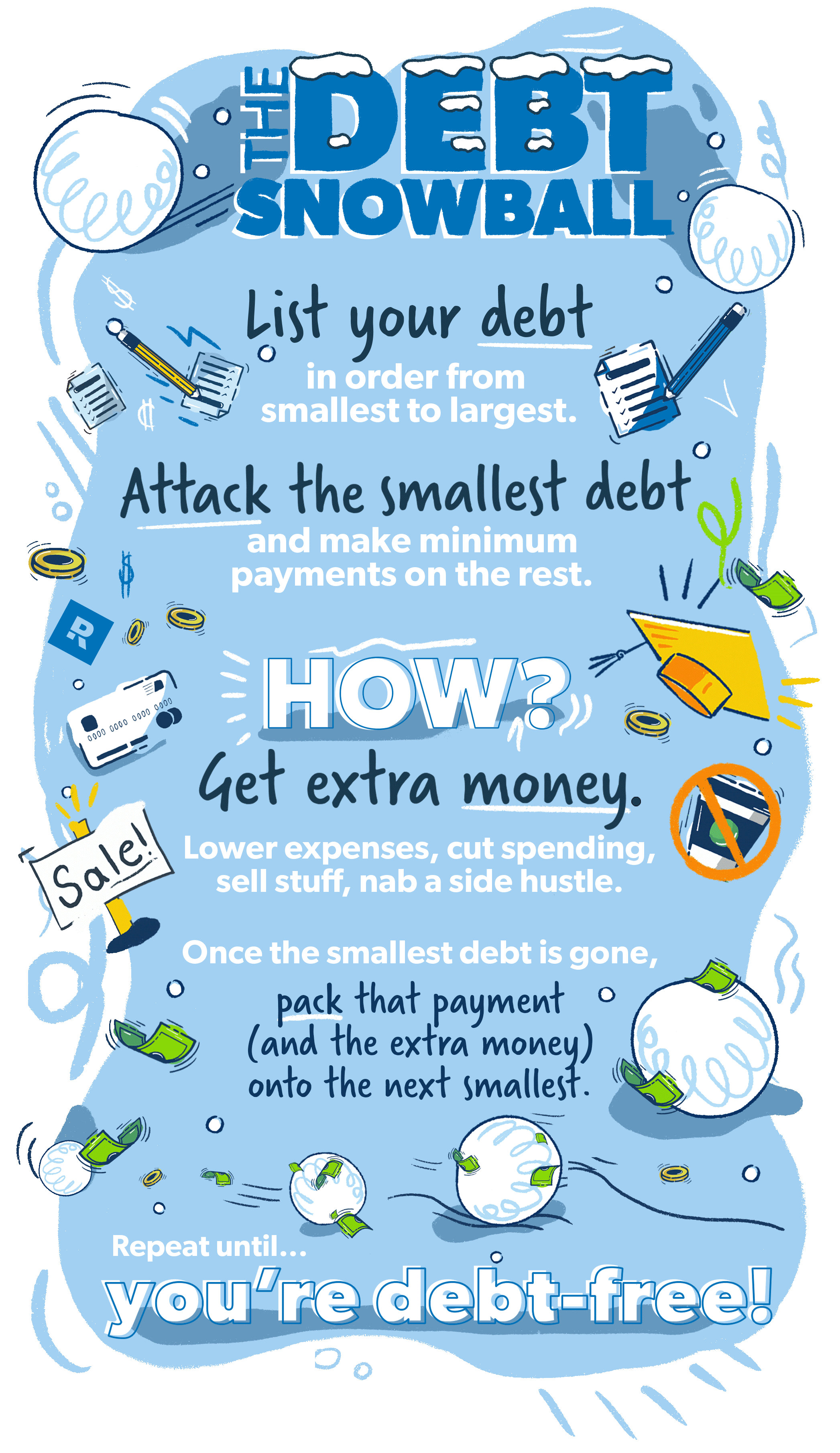


You pay smallest balance first.
Example:
| Card | Balance | APR |
|---|---|---|
| Card A | $2,000 | 24% |
| Card B | $6,000 | 21% |
| Card C | $12,000 | 20% |
Order: A → B → C
Best for: People who need quick wins.
Option B: Debt Avalanche (Save More Money)


You pay highest interest first.
Order: Highest APR → Lowest APR
Best for: People focused on math and savings.
Which is Better?
| Factor | Snowball | Avalanche |
|---|---|---|
| Motivation | High | Medium |
| Interest saved | Medium | High |
| Drop-out risk | Low | Medium |
Truth: Both work. Pick the one you’ll stick with.
Step 3: Build a “Debt Attack” Budget
You need extra money every month.
The 50–30–20 → 60–25–15 Model
For debt payoff, adjust:
| Category | Target |
|---|---|
| Needs | 60% |
| Wants | 25% |
| Debt | 15%+ |
Example (Income $3,800):
| Category | Amount |
|---|---|
| Needs | $2,280 |
| Wants | $950 |
| Debt | $570+ |
Goal: Push debt payment to $700–$1,000/month if possible.
Easy Cuts That Work
Small changes = big results:
Cancel unused subscriptions → +$80
Eat out 2× less → +$150
Switch phone plan → +$50
Refinance insurance → +$40
👉 That’s $320/month extra = $3,840/year
Step 4: Lower Your Interest (Power Move)
High APR is your biggest enemy.
1. Balance Transfer Cards (0% APR)
Look for:
12–21 months 0%
Fee: 3%–5%
Example:
$10,000 transfer → 4% fee = $400
But saves $2,000+ in interest.
2. Personal Loan (Consolidation)
Combine cards into one loan.
Typical rates: 7%–15%
Best if your credit is 650+
3. Nonprofit Credit Counseling
Talk to agencies approved by:
National Foundation for Credit Counseling
They offer Debt Management Plans (DMPs) that may cut interest to 6%–9%.
(Source: Investopedia)
Step 5: Increase Income (Fastest Way Out)
Budgeting alone is slow. Income speeds things up.
Side Hustles That Work in the USA
| Method | Monthly |
|---|---|
| Uber/DoorDash | $300–$600 |
| Freelance online | $200–$800 |
| Weekend retail | $250 |
| Sell unused items | $500 (one-time) |
Even $400 extra/month = $4,800/year → Debt gone faster.
Step 6: Sample 24-Month Payoff Plan (Chart)
Scenario
Debt: $20,000
APR: 22%
Payment: $950/month
Balance transfer used
| Month | Balance |
|---|---|
| 0 | $20,000 |
| 6 | $14,900 |
| 12 | $9,300 |
| 18 | $4,200 |
| 24 | $0 |
👉 Result: Debt-free in 2 years.
Without strategy, same debt = 6–8 years.
Step 7: Protect Your Credit While Paying Off
Good habits:
✔ Always pay minimums
✔ Set auto-pay
✔ Keep utilization <30%
✔ Avoid new cards
Your score can improve during payoff.
(Source: Consumer Financial Protection Bureau)
Step 8: Avoid Dangerous Shortcuts
Be careful with:
❌ Payday loans
❌ Unverified debt relief companies
❌ “Stop paying” schemes
❌ Upfront settlement fees
Check guidance from:
Internal Revenue Service and CFPB
Real-Life Example (USA)
Sarah — Ohio, School Teacher
Debt: $21,500
Income: $3,600/month
Strategy: Avalanche + Side Hustle
Actions:
Tutoring weekends: +$400
Budget cut: +$250
Balance transfer
Payment: $900/month
Result: Debt-free in 26 months.
Now saving $700/month.
Helpful Videos & Visual Guides
Recommended Learning
CFPB Debt Basics
https://www.youtube.com/watch?v=7Q4zGQvH3ZkSnowball vs Avalanche
https://www.youtube.com/watch?v=HRd8Yk6WQW4Balance Transfer Explained
https://www.youtube.com/watch?v=H0uB2p8sN2MBudgeting for Beginners
https://www.youtube.com/watch?v=3pslPbfpnzk
(Search official channels and verified creators.)
Internal Links (MoneySense America)
👉 “Best Balance Transfer Credit Cards in the USA”
moneysenseamerica.blogspot.com👉 “How to Build Emergency Fund After Debt”
moneysenseamerica.blogspot.com👉 “Personal Loans vs Credit Cards Explained”
moneysenseamerica.blogspot.com
Frequently Asked Questions (FAQ)
Q1: Can I really pay off $20,000 in 2 years?
Yes. With $800–$1,000/month and lower interest, it is realistic.
Q2: Should I use debt settlement?
Usually no, unless you are already in default. It hurts credit and may cause tax issues.
(Source: Internal Revenue Service)
Q3: Is consolidation better than snowball?
Consolidation helps interest. Snowball helps behavior. Many people use both.
Q4: What if I miss a payment?
Contact lender immediately. Ask for hardship programs. Do not ignore.
Q5: Should I close paid cards?
No. Keep old cards open (with zero balance) to help credit length.
Statutory Disclaimer
This article is for educational purposes only. It does not provide legal, tax, or financial advice. Individual situations differ. Consult a licensed financial advisor, certified credit counselor, or tax professional before making major financial decisions. MoneySense America and the author are not responsible for actions taken based on this content.
Bibliography & References
Consumer Financial Protection Bureau — Credit Card & Debt Guidance
https://www.consumerfinance.govInvestopedia — Debt Repayment Strategies
https://www.investopedia.comNational Foundation for Credit Counseling
https://www.nfcc.orgInternal Revenue Service — Canceled Debt
https://www.irs.govFederal Reserve — Household Debt Data
https://www.federalreserve.gov
Final Words: Your 90-Day Action Plan
If you remember nothing else, do this:
Month 1
✔ List all debts
✔ Make budget
✔ Cut $200+
Month 2
✔ Apply for balance transfer / loan
✔ Start $700+ payments
Month 3
✔ Add side income
✔ Track progress
Repeat for 24 months → Freedom.
Remember
💬 Debt is not a moral failure.
💬 It is a math + habit problem.
💬 You can solve it.
With discipline, planning, and patience, $20,000 can become $0.


Comments
Post a Comment