How Student Loans Work in the USA — A Simple, Real-Life Guide for Working Adults
How Student Loans Work in the USA — A Simple, Real-Life Guide for Working Adults


For millions of Americans, student loans are the bridge between dreams and degrees.
They help people become teachers, engineers, nurses, analysts, and entrepreneurs.
But when misunderstood, they can also become a long-term financial burden.
If you or your family is dealing with college costs, this guide will explain:
How student loans really work in the USA
Federal vs private loans
Repayment systems
Interest and forgiveness
Real examples and charts
Smart strategies to avoid trouble
Let’s break it down in a clear, simple, and practical way.
What Are Student Loans? (In Simple Words)
A student loan is money you borrow to pay for:
Tuition
Books
Housing
Food
College fees
You promise to repay it later — with interest.
Most U.S. student loans are managed by the
U.S. Department of Education
through its student aid program.
Today, over 40 million Americans carry student loan debt.
(Source: Investopedia)
Step 1: FAFSA — The Gateway to Student Aid
Before getting most loans, you must fill out FAFSA (Free Application for Federal Student Aid).
It is managed by
Federal Student Aid.
Website: https://studentaid.gov
What FAFSA Does
FAFSA decides your eligibility for:
✔ Grants (free money)
✔ Scholarships
✔ Federal loans
✔ Work-study jobs
Important Rule
👉 Always fill FAFSA first — even if you think you won’t qualify.
Many families skip this and lose free aid.
Two Main Types of Student Loans
1. Federal Student Loans (Government Loans)
These are the safest and most flexible loans.
| Feature | Federal Loans |
|---|---|
| Issuer | Government |
| Interest | Fixed |
| Repayment help | Yes |
| Forgiveness | Possible |
| Credit check | No (mostly) |
Types include:
(Source: Consumer Financial Protection Bureau)
2. Private Student Loans (Bank Loans)
These come from:
Banks
Credit unions
Online lenders
| Feature | Private Loans |
|---|---|
| Issuer | Private companies |
| Interest | Fixed/Variable |
| Forgiveness | Rare |
| Flexibility | Low |
| Credit check | Yes |
Use private loans only after federal options.
How Federal Loans Work (With Example)
Example: Emily — Community College → University
Emily borrows:
| Year | Loan Type | Amount |
|---|---|---|
| Year 1 | Subsidized | $3,500 |
| Year 2 | Unsubsidized | $4,500 |
| Year 3 | Unsubsidized | $5,500 |
| Year 4 | PLUS | $6,000 |
Total: $19,500
Interest Rule
Subsidized → Government pays interest while studying
Unsubsidized → Interest starts immediately
This difference matters a lot over time.
Interest Rates: The Hidden Cost
Interest is the extra money you pay.
Typical Federal Rates (Approx.)
| Loan Type | Rate |
|---|---|
| Undergrad | 5%–6% |
| Graduate | 6%–7% |
| PLUS | 7%–8% |
(Varies yearly — check studentaid.gov)
Example Impact
$25,000 at 6% for 10 years:
Principal: $25,000
Interest: ~$8,300
Total: ~$33,300
That’s why rate matters.
When Do You Start Repaying?
The Grace Period
Most federal loans give:
🕒 6 months after graduation
Before payments begin.
Use this time wisely.
✔ Build emergency fund
✔ Find job
✔ Set up repayment plan
Repayment Plans Explained (Easy Chart)

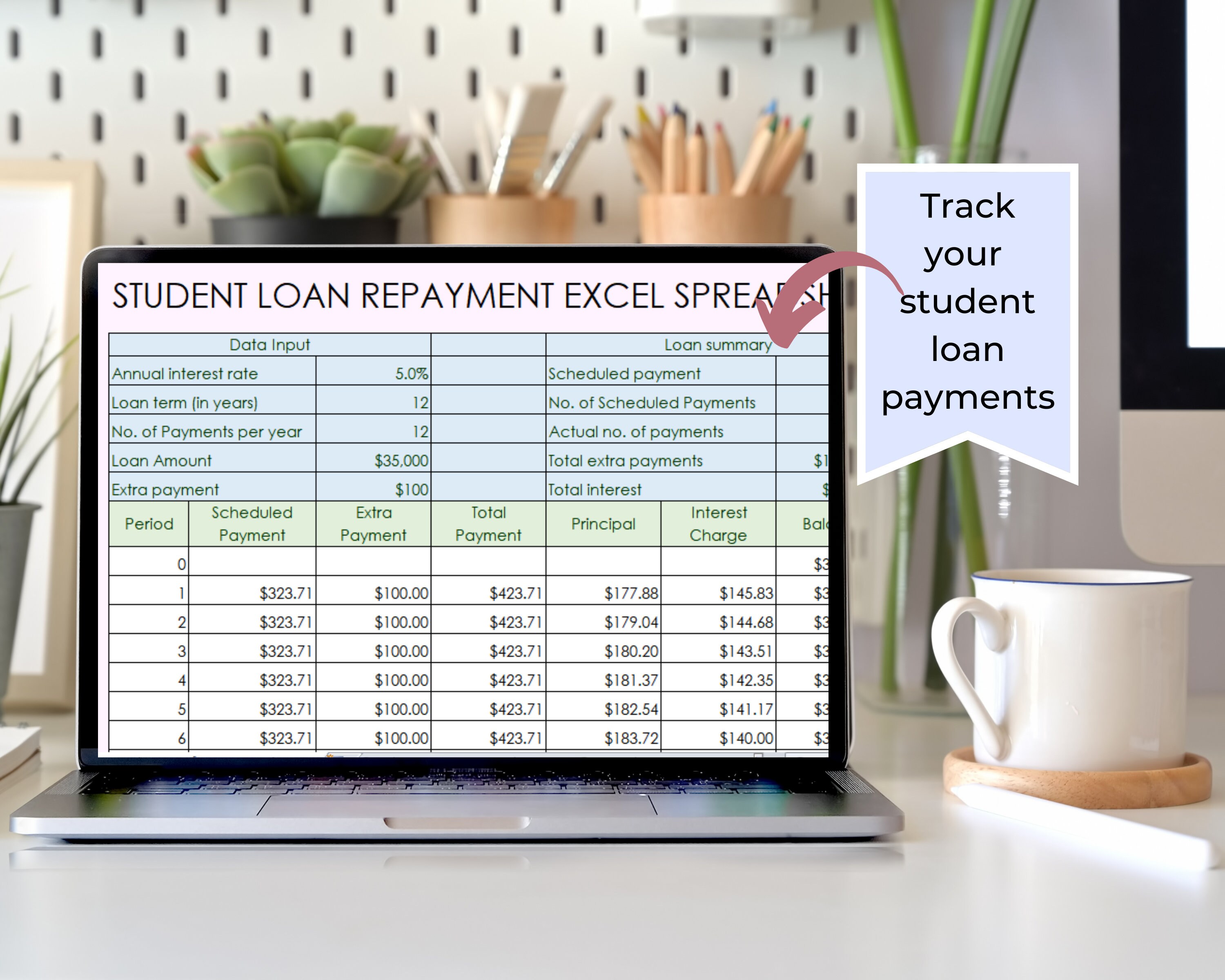

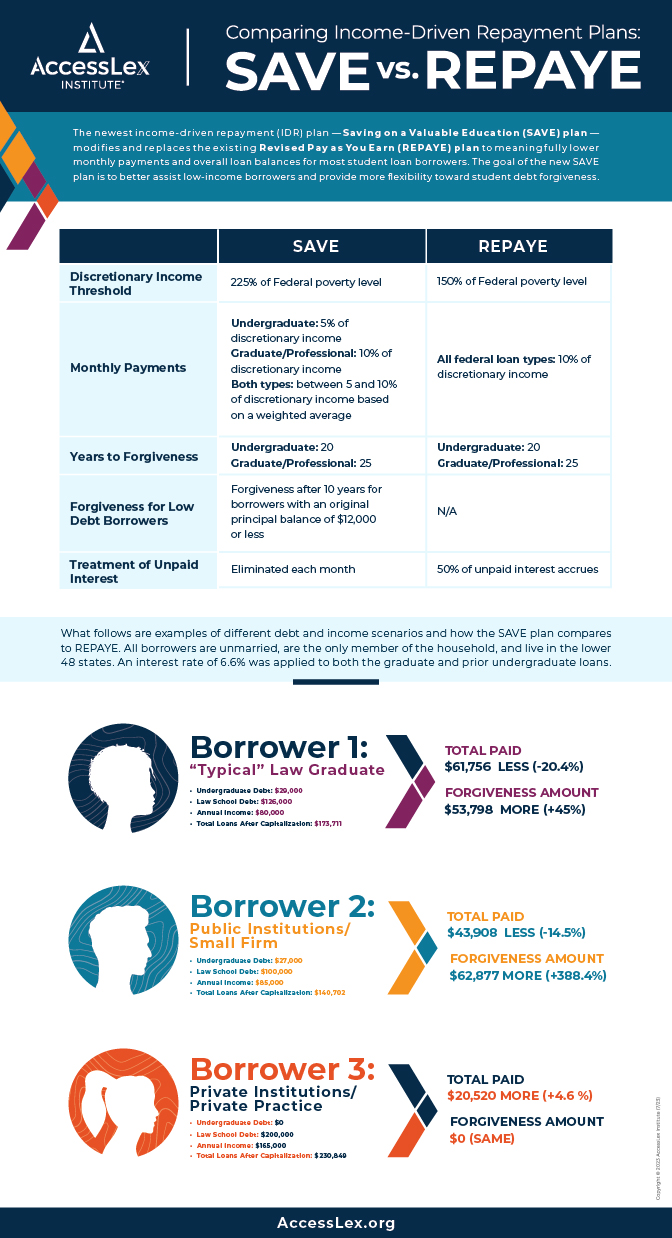
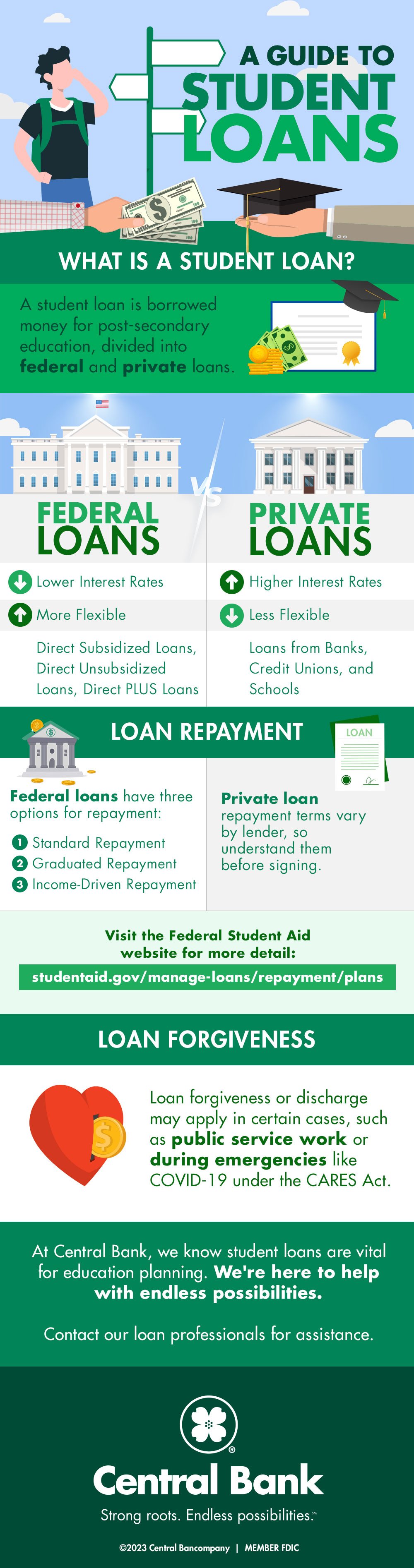
Main Federal Repayment Options
| Plan | Monthly | Best For |
|---|---|---|
| Standard (10 yrs) | High | Save interest |
| Graduated | Starts low | Growing income |
| Extended | Low | Large balances |
| Income-Driven (IDR) | Based on income | Tight budgets |
Income-Driven Plans (IDR)
Includes:
PAYE
IBR
Payment = 5%–15% of income
After 20–25 years → remaining balance may be forgiven.
Loan Forgiveness Programs
1. Public Service Loan Forgiveness (PSLF)
Work in:
✔ Government
✔ Nonprofit
✔ Public schools
✔ Hospitals
Pay for 10 years → balance forgiven.
(Details at studentaid.gov)
2. Income-Based Forgiveness
After long-term IDR payments, remaining debt may disappear.
⚠ But forgiven amount may be taxable.
Check rules with
Internal Revenue Service.
Private Loans: Extra Caution Needed
Private loans:
❌ No forgiveness
❌ Limited hardship help
❌ Can be expensive
Example:
$20,000 at 10% variable → may become $35,000+
Use only when unavoidable.
Real-Life Case Study (USA)
David — IT Graduate, Arizona
Debt: $32,000 (Federal)
Income: $55,000/year
Plan: SAVE (IDR)
Monthly payment: $240
Later switched to Standard.
Result: Paid off in 9 years.
Saved $6,000 in interest.
Common Student Loan Mistakes
Avoid these:
❌ Borrowing max every year
❌ Ignoring interest
❌ Missing FAFSA
❌ Defaulting
❌ Choosing wrong plan
Default ruins credit and may cause:
Wage garnishment
Tax refund seizure
Social Security offset
(Source: CFPB)
Smart Strategy: The 5-Step Student Loan Plan
Step 1: Borrow Less
Live modestly in college.
Roommates > Luxury apartments.
Step 2: Track Your Balance
Check quarterly at studentaid.gov.
Know your number.
Step 3: Choose Right Repayment
Low income → IDR
Stable income → Standard
Step 4: Pay Extra When Possible
Even $50/month saves thousands.
Step 5: Refinance Carefully
Private refinancing lowers rate but removes protections.
Do only if stable job.
Internal Links (MoneySense America)
👉 “How to Pay Off $20,000 Credit Card Debt”
moneysenseamerica.blogspot.com👉 “Loan Prepayment Pros and Cons in USA”
moneysenseamerica.blogspot.com👉 “Personal Loans vs Credit Cards Explained”
moneysenseamerica.blogspot.com
Helpful Videos & Learning Resources
Recommended Viewing
Federal Student Aid Basics
https://www.youtube.com/watch?v=0xZ8B1vZK0MIDR & SAVE Plan Explained
https://www.youtube.com/watch?v=K9N5S4WZ9xEPSLF Walkthrough
https://www.youtube.com/watch?v=7cJ4QZpF5qMStudent Loan Repayment Tips
https://www.youtube.com/watch?v=3LQmRZP2kHg
(Search official channels for updates.)
Frequently Asked Questions (FAQ)
Q1: Are federal loans better than private?
Yes. They offer protection, forgiveness, and flexibility.
Q2: Can student loans be forgiven?
Yes, under PSLF or IDR programs — if rules are followed.
Q3: Should I pay while in college?
Yes, if possible. Paying interest early saves money.
Q4: Can student loans be discharged in bankruptcy?
Very rarely. It requires extreme hardship proof.
Q5: Should parents take PLUS loans?
Only if repayment is affordable. Otherwise, consider alternatives.
Statutory Disclaimer
This article is for educational and informational purposes only. It does not constitute legal, financial, or tax advice. Student loan rules and programs change frequently. Consult official government resources, certified financial advisors, or student aid counselors before making major borrowing or repayment decisions. MoneySense America and the author are not responsible for actions taken based on this information.
Bibliography & References
Federal Student Aid — U.S. Department of Education
https://studentaid.govConsumer Financial Protection Bureau — Student Loan Tools
https://www.consumerfinance.govInvestopedia — Student Loan Guides
https://www.investopedia.comInternal Revenue Service — Tax on Forgiven Debt
https://www.irs.govNational Center for Education Statistics — College Costs
https://nces.ed.gov
Final Takeaway: The Golden Rule of Student Loans
Remember this:
🎓 Borrow only what you need
💼 Choose the right plan
💰 Pay extra when possible
📈 Protect your future
Student loans are tools — not traps.
Used wisely, they build careers.
Used carelessly, they delay dreams.
With knowledge and planning, you can make them work for you — not against you.


Comments
Post a Comment